
FAQs About Our Generator Services
The scheduler is taking longer than usual to load.
Open the scheduler in a new tab
or call (888) 477-7038
How to Check oil on GENERAC Aircooled Generators
This video is about how to check the oil on the Whole Home GENERAC Aircooled Generators. It’s suggested to check your oil every 2-3 days of constant running of your generator. Whole Home GENERAC Aircooled Generators take about 1.75 quarts of 5W-20 full synthetic oil.
GENERAC Generator Control Panel
This video is about how to use the control panel on Whole Home Generac Aircooled Generators. The control panel can be used to find information like run hours and maintenance schedules. It also controls when and how the Generator will come on when needed.
Automatic Transfer Switch- Performing Manual Transfer
This video is about your Automatic Transfer Switch and how to perform a manual transfer if there is a failure.
FAQs
What are the advantages to Home Standby Generators?
An average home uses more than a hundred electrical appliances and devices to provide convenience, comfort and security. It is, therefore, essential that a backup home generator is installed to prepare for a power outage.
An automatic home standby generator has major advantages over a manual portable generator. The automatic start, permanent fixture, increase in power, cleaner fuel, low running costs and all-weather operation. Standby power systems start automatically within seconds after electricity goes out and ensures a continuous electrical supply.
A Transfer Switch immediately senses when power is interrupted and transfers power to the generator. It also senses when power is restored and transfers the load back to the utility source and signals the generator to shut down. The automatic standby generator is installed outdoors and linked directly to the home’s permanent fuel supply.
What is the difference between a home standby generator and a home battery system?
The prime difference is that a battery is meant to store power and a generator creates power. In a power outage, a generator can continuously produce power; a battery can only distribute what has been stored.
Can a battery provide the same backup power support to my home as a generator?
The simple answer is no. Both products do help supply electricity that homeowners can use for any electrical device in their home—from air conditioning to microwaves. Home standby generators, when properly installed and wired to the home’s circuitry, can provide adequate wattage to the home to run all selected circuits simultaneously, with the output they require. Home appliances draw different amounts of power when they operate—a microwave may require 1000 watts of power, and a refrigerator may require 500 to 750 watts to operate. Generators steadily produce their power, fully supporting all circuits they are wired to.
The return on investment, however, makes power supplied by a generator less expensive over the life of the product based on how much output it provides. Home batteries cannot supply the full wattage of the power they may hold all at once. For example, a battery that may be charged with up to 10 kWh of energy, in order to protect the longevity of the battery, cannot dispense its power at more than a 2 kilowatts-per-hour rate. This means that only certain appliances would be able to draw power at any given time from the battery. In a power outage, the battery could support only limited items in a home at one time (e.g., just the refrigerator, but not the furnace).
Visit Generac’s home backup generator sizing calculator to learn what it takes to power your home
We have frequent power outages because of storms and inclement weather as well as the nation’s aging electrical grid. What’s the right backup power solution for me?
The most reliable source of power for extended or unpredictable power outages is a home standby generator. The generator, which in most cases is connected directly to a home’s natural gas line, has a constant supply of fuel and can operate through extended outages, keeping homes safe, lit and powered. For people concerned with a loss of natural gas supply during a storm, generators can be fueled by a dedicated LP tank as well. With this continuous fuel source, generators are much better able to face the unpredictability of dangerous, storm-prompted or lengthy outages rather than a home battery, which relies on an external power source to recharge it after only a few hours of use.
What are the advantages to Home Standby Generators?
An average home uses more than a hundred electrical appliances and devices to provide convenience, comfort and security. It is, therefore, essential that a backup home generator is installed to prepare for a power outage.
An automatic home standby generator has major advantages over a manual portable generator. The automatic start, permanent fixture, increase in power, cleaner fuel, low running costs and all-weather operation. Standby power systems start automatically within seconds after electricity goes out and ensures a continuous electrical supply.
A Transfer Switch immediately senses when power is interrupted and transfers power to the generator. It also senses when power is restored and transfers the load back to the utility source and signals the generator to shut down. The automatic standby generator is installed outdoors and linked directly to the home’s permanent fuel supply.
What size Generator Do I Need for my Home or Business?
By determining your backup power needs, you can size your generator to fit your home or business. Decide what items are important to you in a power outage. Depending on where you live, having a backup generator can make the difference between burst pipes and shivering through a winter power outage or staying warm and protected while you wait for electricity to be restored. Several considerations come into play when thinking about the size, or wattage, of generator that the typical person needs to have at home.
Use this simple tool from Generac to find what size generator best fits your needs: Generac Sizing Tool
What are the most common reasons why homeowners invest in home backup generators?
Heating and air conditioning are top concerns, along with running water and hot water.
All of these items are high-load appliances and require a high capacity to start. These actions consume significant power and could quickly drain a battery. There are a number of ways homeowners can prepare for a power outage.
How would any product help me live “off grid”?
Homeowners who wish to operate the appliances and features of their home without being connected to their community’s standard power grid explore a number of options to provide constant energy to their home. Often these options still require a fuel source. In the case of certain battery backup options, the fuel source is stored solar energy. By going “off grid” a home only powered by a battery power source using solar fuel must rely on the unpredictable coverage and collection of sunlight to recharge it—impractical in most parts of the country. Home standby generators fuel is often available in the homes area in the form of natural gas or propane. A more reliable resource—natural gas—is abundant, relatively inexpensive and cleaner burning than many other fuel types. Propane fuel can be delivered and refilled as their owner desires, unlike sunlight. For those homeowners who wish to disconnect from the power grid in their area, the power that supplies their home must be sourced to a power-supplying unit and safely designed to transfer to their electrical system, a process that requires a professional electrician or generator/battery installer. For anyone who is interested in grid independence, a generator is a valuable component of their off-grid process. Generac has engineered the EcoGen home backup generator as the first automatic unit warranted for off-grid use when used in an alternative energy system.
Can I use a home standby generator to go off grid and cut the cord from my electric utility company?
Home standby generators are designed for backup power in the event of a power outage. Using a generator to power a home full-time is likely impractical from a fuel-consumption perspective, maintenance requirements, etc. However, some standby generators, like the Generac EcoGen, are designed to work in conjunction with alternative-energy-powered homes (solar, wind, etc.) that may be disconnected from the grid.
Is my ability to have a home standby generator or a home battery limited by the region I live in?
No. A generator is equally effective in all regions and climates. Some generators are even made with protective shells and anchoring systems for homes in high-wind or hurricane-prone areas.
Like a generator, a home battery powered by solar panels can be installed in any region; however, it is less effective in areas with inconsistent sunlight or on homes with sunlight filtered by shade.
Will battery technology be available for generators?
While batteries will have a place in home energy systems, storage battery technology is not advanced enough to be a cost-effective addition to a generator used as a backup power source.
Does a standby generator require an AC/DC power inverter like a battery storage product?
No, the generator produces AC power, which can connect directly to a home’s electrical distribution panel.
How much power output can a generator produce?
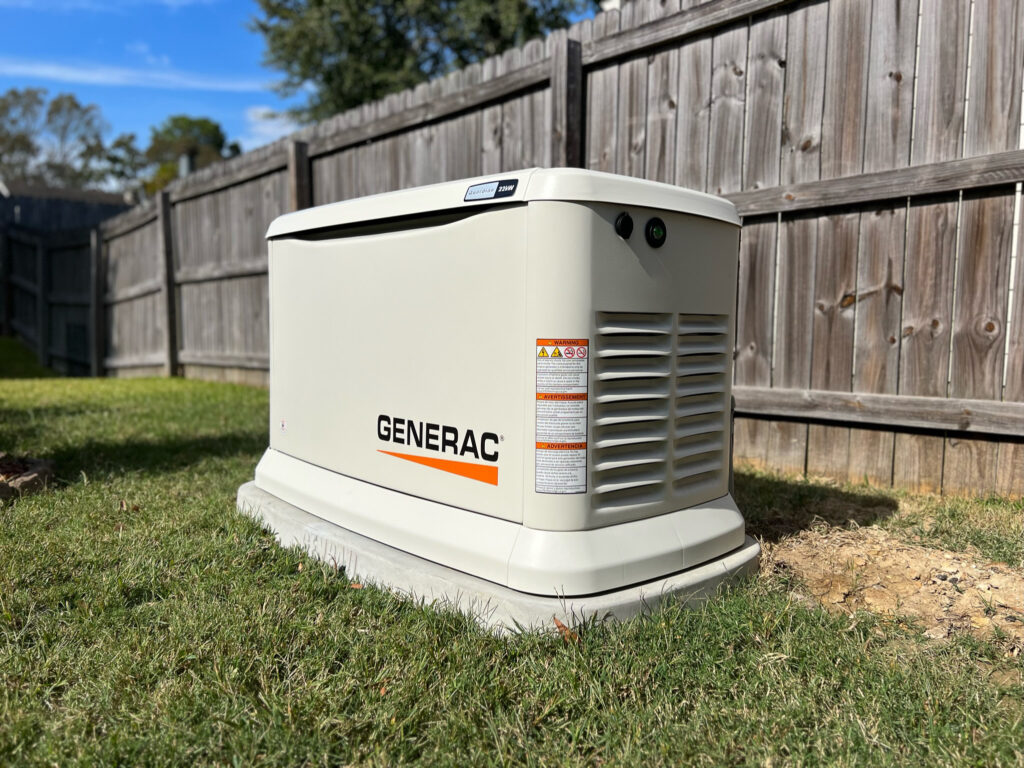
The most popular Generac generator model produces 22kW, which is commonly installed to power the entire home, including all the most common appliances in a home, such as high-load central air conditioners, electric heaters, kitchen appliances, etc.4
How Do I Maintain My Generator?
An automatic standby generating system typically has three basic elements: a generator, a transfer switch and a service-entrance breaker.
- Generator – Produces electricity for essential circuits, such as heating, air conditioning, refrigeration, security and lighting. Your backup needs, simple or more extensive, determine the size and output of the unit.
- Transfer Switch – Immediately senses when power is interrupted and transfers power generation responsibility to the generator. Senses when power is restored and transfers the load back to the utility source and signals the generator to cool off and shut down.
- Service Entrance Breaker – Provides protection to your transfer switch, internal breakers and circuits and generator due to electrical strikes and power surges. See below for the step by step process of a Generator Installation:
Let’s Power Up
Want to learn more about how Optimize delivers faster, smarter, and more affordable protection? Explore our generator solutions or schedule a consultation today.